
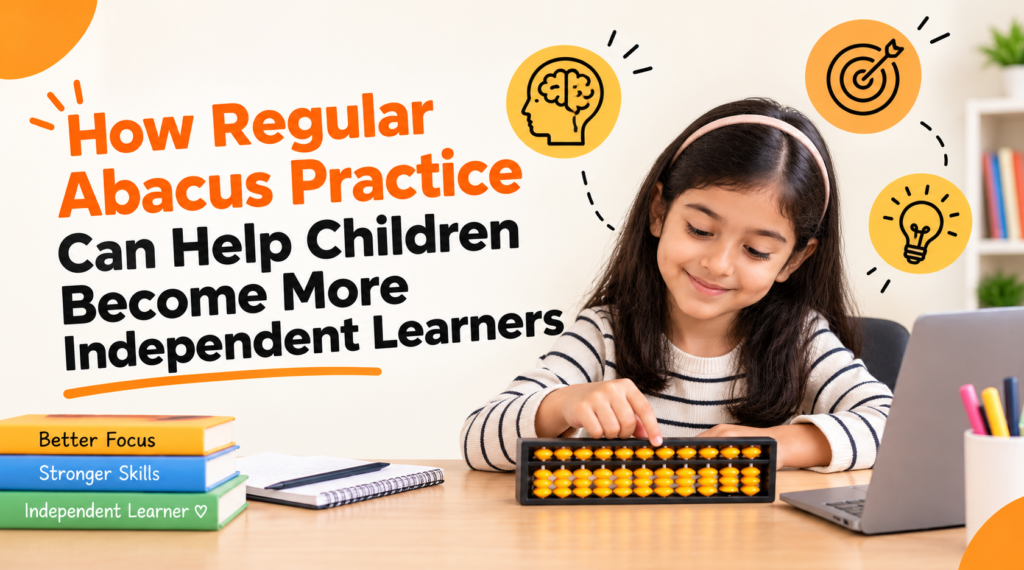
Developing independent learning habits is an important part of a child’s education. Children who learn to practise regularly, solve problems, and manage small tasks on their own can become more confident in their studies. Abacus Classes offer a structured way to introduce these habits through calculation exercises, regular practice, and step-by-step learning. With consistent guidance, children can gradually become more comfortable learning independently.
Understanding Independent Learning Through Abacus
Independent learning encourages children to take responsibility for their own progress. Abacus learning involves understanding numbers, practising calculations, and gradually attempting more challenging exercises.
Regular abacus practice can help children:
- Develop the habit of practising without constant reminders.
- Approach mathematical problems with greater confidence.
- Follow instructions and complete exercises independently.
- Recognise mistakes and learn from them.
- Take an active role in their learning progress.
How Regular Abacus Practice Builds Independence
Consistent practice helps children become familiar with calculation techniques and gradually rely less on step-by-step assistance. Parents can encourage this development through a few simple habits.
- Encourages self-practice: Setting aside a regular time for abacus exercises helps children develop responsibility for their learning.
- Improves problem-solving: Attempting calculations independently encourages children to think through problems before seeking help.
- Builds confidence: Completing exercises without constant assistance can give children a sense of achievement.
- Develops patience: Repeating exercises teaches children to work through challenges instead of giving up immediately.
- Promotes self-discipline: Following a regular abacus practice schedule helps children develop consistent study habits.
The Role of Parents in Developing Independent Learners
Parents play an important role in helping children become independent. However, providing support does not always mean giving immediate answers. Allowing children to attempt exercises on their own can help them develop confidence.
Parents can encourage independent learning by:
- Creating a fixed time for daily abacus practice.
- Allowing children to solve simple calculations independently.
- Appreciating effort rather than focusing only on correct answers.
- Encouraging children to identify and correct their mistakes.
- Providing guidance when children genuinely need help.
These small steps can gradually help children take greater responsibility for their learning.
Choosing the Right Abacus Learning Program
Selecting a suitable learning program can make regular practice easier to maintain. Parents considering Abacus Classes for Kids should look for structured lessons, age-appropriate exercises, and regular progress assessments.
When comparing abacus classes for kids online, consider the following factors:
- Experienced instructors who explain concepts clearly.
- Interactive lessons that encourage participation.
- A structured curriculum with progressive learning levels.
- Regular practice activities and assessments.
- Feedback that helps parents understand their child’s progress.
Families looking for Abacus classes in Canada can also consider online programs that allow children to attend lessons from home while maintaining their regular school schedules.
Make Practice a Part of Everyday Learning
Children are more likely to develop independent habits when practice becomes a natural part of their daily routine. Short and consistent sessions can help them maintain interest without feeling overwhelmed.
Parents can make practice more engaging by introducing simple calculation challenges, setting achievable goals, and celebrating improvements. Children should also have enough time for homework, hobbies, outdoor activities, and rest.
An abacus franchise is a separate business opportunity for educators and entrepreneurs interested in offering abacus education. Parents choosing a learning program should focus on the curriculum, teaching methods, and practice support available to their children.
Final Thoughts
Regular abacus practice can help children develop valuable learning habits, including self-discipline, patience, problem-solving, and confidence. With appropriate guidance and opportunities to practise independently, children can gradually become more responsible for their own learning.
Whether attending online or offline classes, a consistent and supportive learning environment can help children build independence while developing their mathematical skills.